

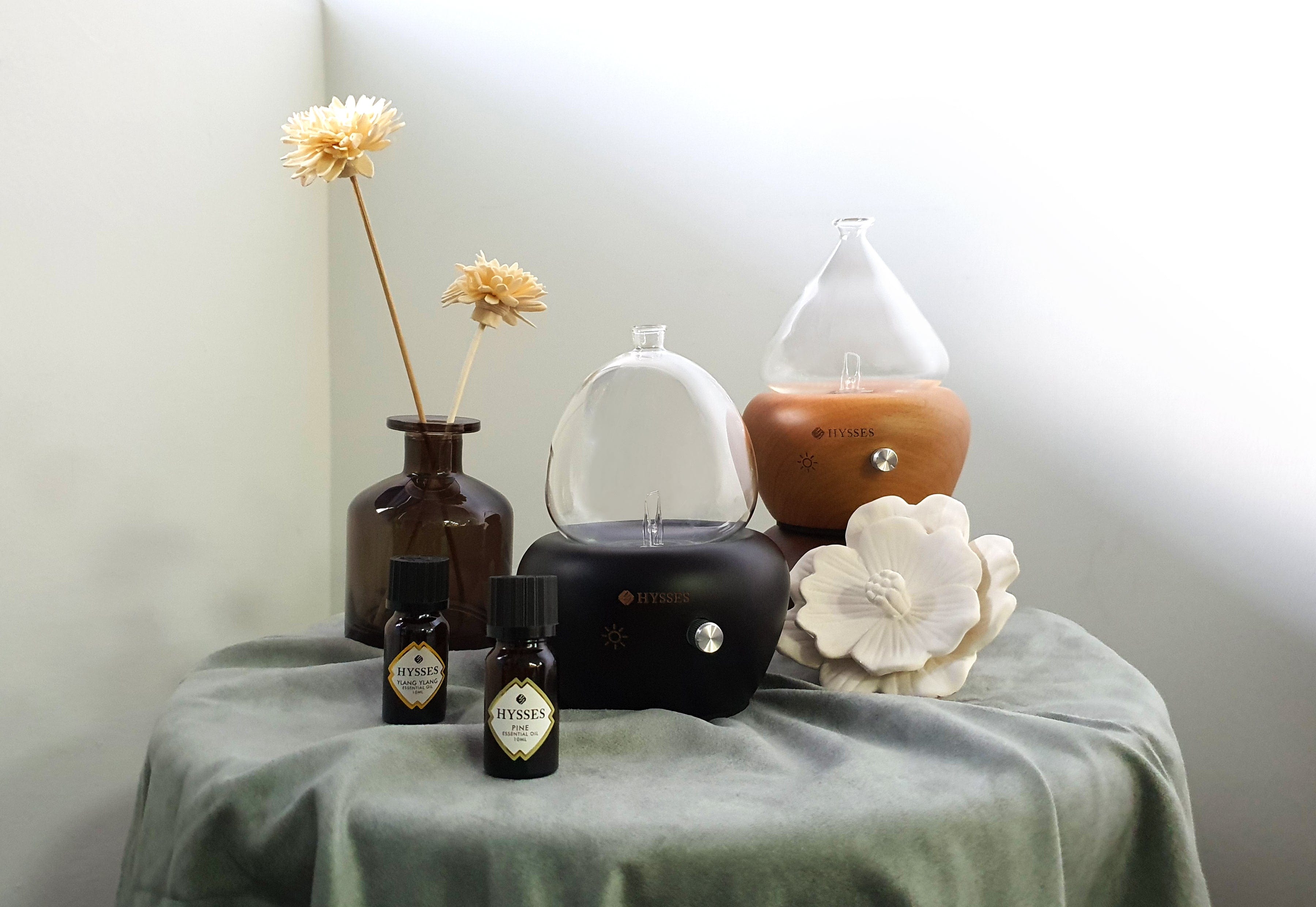
When it comes to supporting respiratory health, whether you’re managing asthma, chronic bronchitis, or soothing a seasonal cough inhalation therapy can make a world of difference. One method that’s gaining significant attention is nebulisation.
While many people associate nebulisers with hospitals, these devices have become increasingly popular for wellness and aromatherapy in Singaporean homes. By converting liquids, such as saline or pure essential oils, into a fine, breathable mist, nebulisers deliver targeted support to the lungs precisely where it’s needed most.
“Nebulisation represents the perfect intersection of science and natural wellness. When used with the right essential oils and proper technique, it can offer both therapeutic and sensory benefits,” - Cheryl Gan, Founder & Managing Director, HYSSES Singapore
What Makes Nebulisers Unique?
Unlike other inhalation tools, nebulisers transform liquid into aerosol, allowing the mist to penetrate deeply into the respiratory system. This process, known as nebulisation, makes the device especially effective for conditions such as:
-
Persistent coughs
-
Asthma or reactive airways
-
Bronchitis and sinus congestion
Different nebuliser technologies achieve this misting effect in various ways:
-
Jet nebulisers use compressed air.
-
Ultrasonic nebulisers rely on high-frequency vibrations.
-
Mesh nebulisers push liquid through ultra-fine openings for precision misting.
Regardless of the mechanism, the goal remains the same: efficient delivery of fine, breathable particles into your system.
How Nebulisation Works
The effectiveness of nebulisation lies in its particle size. An optimal nebuliser produces particles between 1–5 microns, which is the ideal range to reach the bronchi and alveoli deep within the lungs.
-
Too large → particles settle in the mouth or throat
-
Too small → particles may be exhaled before acting
When a saline solution or a carefully selected HYSSES essential oil is placed in the nebuliser chamber, the device disperses it into a therapeutic mist inhaled via a mouthpiece or mask.
According to a 2020 study in the Journal of Environmental Health Research, particles in the 1–5 micron range showed the highest lung deposition efficiency, making nebulisation one of the most direct methods for respiratory delivery.
For those experiencing airway irritation, breathlessness, or stubborn coughing, the relief from nebulisation can be almost immediate.
Why Nebuliser Diffusers Are Gaining Popularity in Singapore
Beyond medical use, nebuliser diffusers have carved a niche in Singapore’s wellness community. Unlike ultrasonic or heat-based diffusers, nebulisers release undiluted essential oils in their purest form, offering stronger and faster aromatic effects.
-
Eucalyptus Essential Oil – Naturally clearing and camphorous, helps ease breathing.
-
Lavender Essential Oil – Soothing and balancing, ideal for evening sessions.
-
Peppermint Essential Oil – Invigorating and fresh, supports sinus relief.
These oils, available in the Essential Oils Collection, can be used individually or blended for a tailored experience.
“Nebulisation delivers essential oils in their most concentrated form, making it ideal for those seeking fast, targeted support, especially in Singapore’s humid climate where respiratory discomfort can flare up quickly," - Cheryl Gan
For more on selecting the right device, read our HYSSES Nebuliser: A Review of Features and Benefits.
Key Factors That Influence Nebulisation Effectiveness and Safety
1. Solution Consistency
Only use saline or HYSSES essential oils labelled as safe for nebulisation. Liquids that are too viscous won’t atomise properly.
2. Environment
Singapore’s humidity affects particle travel. Excess moisture may cause particles to clump, while overly dry environments may lead to rapid evaporation. Aim for a balanced indoor environment.
3. Device Maintenance
Unclean nebulisers can harbour bacteria and reduce performance. After each session:
-
Rinse components with warm water
-
Allow to air-dry fully
-
Perform a weekly deep clean using Nebuliser Cleaning Solution to maintain hygiene
Read more on safe usage in Comprehensive Guide to Nebulisers and Oils Unsuitable for Nebuliser Diffusers: What to Avoid.
Addressing Safety and Common Misunderstandings
Many assume nebulisers are only for emergencies, but when used properly, they can be part of everyday wellness routines.
Key safety considerations:
-
Follow recommended usage (typically 1–3 sessions per day) unless advised otherwise by a healthcare professional.
-
Only use essential oils specifically formulated for nebulisation.
-
Discontinue use if you experience throat irritation and consult a medical professional if symptoms persist.
Aromatherapy expert Robert Tisserand has noted that improper use of potent oils—especially in enclosed spaces—can cause discomfort, highlighting the need for moderation and quality oils.
Explore the full Essential Oils Collection to find inhalation-safe options such as Tea Tree, Lemongrass, and Frankincense, all sustainably sourced and batch-tested for purity.
Making the Most of Nebulised Therapy
To maximise benefits:
-
Choose high-quality devices with adjustable mist settings
-
Opt for portable models for home or travel use
-
Breathe slowly and deeply during sessions to help the mist reach deeper into your lungs
Nebulisation is more than just therapy—it’s a synergy of science and sensory experience. Whether you’re managing chronic respiratory issues, calming a stubborn cough, or simply seeking a peaceful aromatic environment, a well-maintained nebuliser paired with the right oils can become an indispensable wellness companion.
Final Thoughts
Nebulisation offers a powerful, natural way to support respiratory health—combining clinical precision with the therapeutic benefits of pure essential oils. With proper technique, thoughtful oil selection, and regular maintenance, you can enjoy cleaner airways and enhanced overall wellness.
Explore HYSSES’ curated Nebulisers and Essential Oils to begin your journey towards better breathing and balanced living.
Frequently Asked Questions (FAQs)
1. Which essential oils are best for nebulisation?
Eucalyptus, Lavender, Peppermint, Frankincense, and Tea Tree are ideal for respiratory support and safe for nebuliser use.
2. How often can I use a nebuliser diffuser daily?
1–3 sessions per day is generally safe. For medical conditions, consult your doctor.
3. Can I use any essential oil in my nebuliser?
No. Only use HYSSES essential oils labelled safe for nebulisation. Avoid oils that are too thick or resinous.
4. How do I clean my nebuliser properly?
Rinse after each use and perform a weekly deep clean with Nebuliser Cleaning Solution.
5. Can nebulisation replace medical treatment?
No. Nebulisation is complementary and should not replace prescribed medical care. Always consult a healthcare professional for chronic conditions.
Disclaimer
This guide is intended for educational and informational purposes only and is not a substitute for professional medical advice, diagnosis, or treatment. Always seek the advice of your physician or other qualified health provider with any questions you may have regarding a medical condition.
References
-
Tisserand, R. & Young, R. (2014). Essential Oil Safety: A Guide for Health Care Professionals. Churchill Livingstone.
-
Journal of Environmental Health Research (2020). “Particle Size Distribution and Respiratory Deposition of Aerosols.”
-
Harvard Health Publishing. (n.d.). “Essential Oils: Benefits and Risks.”
-
Perry, E., & Perry, R. (2006). Aromatherapy in Healthcare. Oxford University Press.

Share:
Christmas Gift Guide
HYSSES Nebuliser: A Review of Features and Benefits