

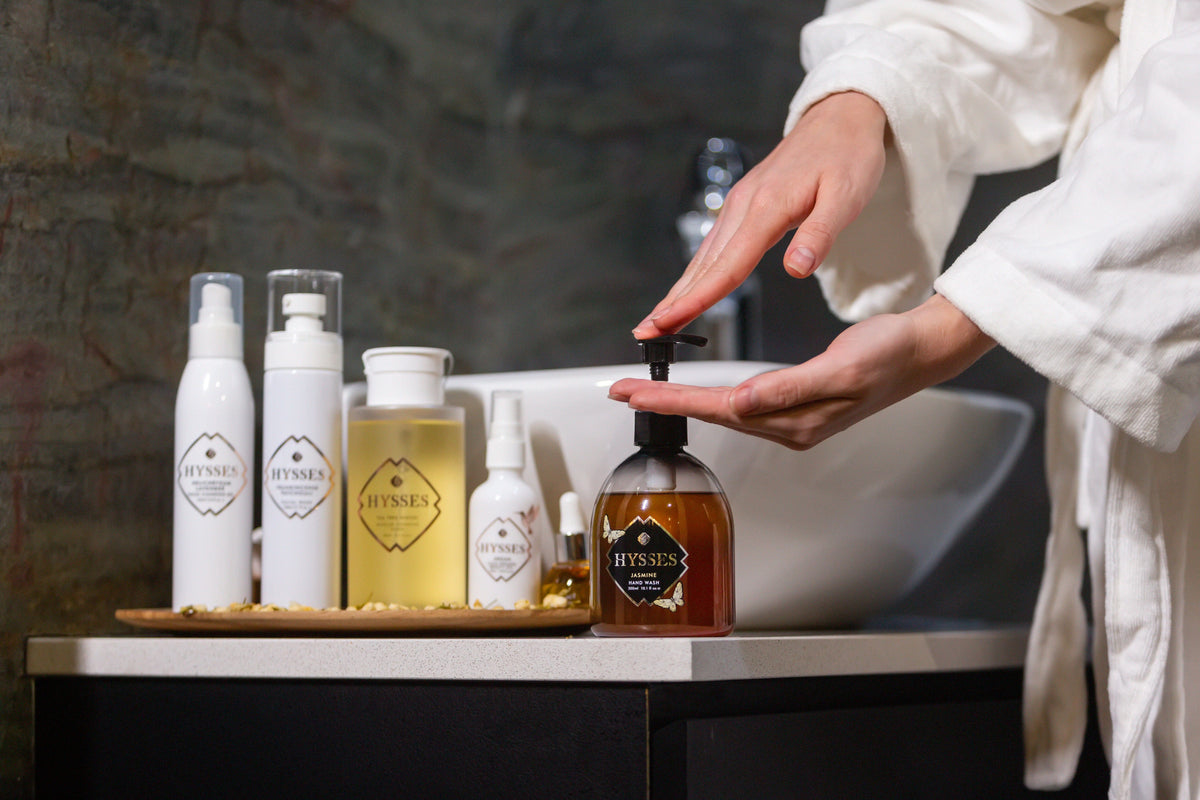
DIY skincare has evolved into more than a trend, it’s now a conscious lifestyle choice rooted in transparency, simplicity, and natural wellness. More individuals are choosing to create their own formulations, allowing greater control over ingredients while embracing a more mindful self-care routine.
At the heart of this movement are essential oils - potent botanical extracts known for their therapeutic and aromatic benefits. When used correctly, they elevate skincare from a daily routine into a refined, sensorial experience.
To begin your journey, explore the Essential Oils Collection, where purity and formulation expertise meet.
“Essential oils must be used with both knowledge and intention. Their potency requires precise formulation to ensure both safety and effectiveness.”
— Cheryl Gan, Founder & Managing Director, HYSSES
Understanding DIY Skincare and Body Care
DIY skincare involves crafting your own beauty and body care products using natural ingredients. This can range from simple toners to nourishing body butters, all tailored to your skin’s unique needs.
This approach offers:
-
Full ingredient control
-
Customised skincare solutions
-
Reduced exposure to synthetic additives
-
A more sustainable beauty routine
Essential oils play a vital role by delivering both functional benefits and aromatherapeutic value, making them indispensable in modern DIY formulations.
Why Essential Oils Are Powerful in Skincare
Essential oils contain naturally occurring compounds that support both skin health and emotional wellbeing.
A study according to Hammer, K. A., et al. (1999), found that certain essential oils exhibit antimicrobial activity, making them beneficial in skincare formulations.
Key Benefits
-
Helps maintain clearer, healthier-looking skin
-
Supports relaxation and stress reduction
-
Enhances DIY formulations naturally
-
Encourages a holistic wellness routine
Using Essential Oils Safely
Due to their concentration, essential oils must be used responsibly.
1. Always Dilute Properly
Essential oils should never be applied directly to the skin.
According to aromatherapy safety expert Robert Tisserand, dilution significantly reduces the risk of irritation.
2. Perform a Patch Test
Test on a small area of skin before full application.
3. Be Mindful of Photosensitive Oils
Citrus oils like Bergamot and Lemon may increase sensitivity to sunlight.
4. Store Correctly
Proper storage ensures longevity and effectiveness.
Refer to usage guidance via Lavender Essential Oil for best practices.
“Storage, dilution, and formulation are essential pillars of safe aromatherapy use.”
— Cheryl Gan
Best HYSSES Essential Oils for DIY Skincare
HYSSES offers a curated selection of high-quality essential oils suitable for skincare applications.
Floral Oils — Calming & Hydrating
-
Lavender Essential Oil
Soft, herbaceous aroma that soothes and balances the skin -
Rose Essential Oil
Luxurious hydration with a delicate floral scent -
Ylang Ylang Essential Oil
Helps regulate oil production while providing a rich, exotic aroma
Lavender has been studied for its calming effects, with research according to Koulivand, P. H., et al. (2013), shows its ability to reduce anxiety and support relaxation.
Clarifying Oils — Purifying & Refreshing
-
Tea Tree Essential Oil — supports blemish-prone skin
-
Eucalyptus Essential Oil — fresh and cleansing
-
Peppermint Essential Oil — cooling and invigorating
Citrus Oils — Brightening & Uplifting
-
Bergamot Essential Oil — balancing and refreshing
-
Grapefruit Essential Oil — energising and revitalising
Woody Oils — Nourishing & Grounding
-
Frankincense Essential Oil — supports skin renewal
-
Sandalwood Essential Oil — deeply calming and hydrating
-
Cedarwood Essential Oil — helps balance oil levels
Simple DIY Skincare Recipes
1. Calming Facial Toner
Ingredients:
-
50ml distilled water
-
2 drops Lavender Essential Oil
-
1 drop Geranium Essential Oil
Benefits: Hydrating and soothing with a soft floral aroma.
2. Clarifying Clay Mask
Ingredients:
-
1 tbsp clay
-
Water
-
1 drop Tea Tree Essential Oil
Benefits: Helps purify pores and manage excess oil.
3. Invigorating Body Scrub
Ingredients:
-
Sugar
-
Carrier oil
-
3 drops Peppermint Essential Oil
-
2 drops Lemon Essential Oil
Benefits: Smooths and refreshes the skin.
Enhance your routine with the Body Wash Collection for a complete cleansing experience.
4. Nourishing Body Butter
Ingredients:
-
Shea butter
-
2 drops Sandalwood Essential Oil
-
2 drops Ylang Ylang Essential Oil
Benefits: Deep hydration with a calming, luxurious scent.
Enhancing Your Aromatherapy Experience
For a complete sensory experience, pair your skincare routine with aromatherapy tools from the Diffusers Collection.
Maintain optimal diffuser performance using the Nebuliser Cleaning Solution.
You may also explore related guides such as:
-
A Step-by-Step Guide on How to Use a Nebuliser Correctly
-
How to Choose the Right Essential Oil for Your Needs
Common Mistakes to Avoid
-
Overusing essential oils
-
Skipping dilution
-
Ignoring skin type
-
Mixing incompatible oils
-
Using improperly stored oils
DIY skincare allows you to take a more intentional and personalised approach to beauty and wellness. With high-quality essential oils and proper knowledge, you can create formulations that are both effective and sensorially enriching.
HYSSES provides expertly crafted essential oils designed to support safe, luxurious, and results-driven skincare.
Begin your journey with the Essential Oils Collection and experience the art of natural wellbeing.
Frequently Asked Questions (FAQs)
1. Can essential oils be applied directly to the skin?
No. They must always be diluted.
2. What dilution is safe for skincare?
1–2% for facial use, up to 3% for body care.
3. Which essential oil is best for beginners?
Lavender Essential Oil is widely recommended due to its gentle nature.
4. Are essential oils safe for sensitive skin?
Yes, when diluted properly.
5. Do essential oils have scientific backing?
Yes. Studies confirm antimicrobial and therapeutic properties.
Disclaimer
This guide is intended for educational and informational purposes only and is not a substitute for professional medical advice, diagnosis, or treatment.

Share:
Stay Fresh & Protected with Anti-Mosquito Cooling Spray
How to Make a DIY Natural Cleaning Spray with Essential Oils